

I had a round table conversation last week with a group of founders building AI-native solutions. One common theme that emerged was how fast things are moving and how difficult it seems to be to nail down positioning when core AI capabilities and what’s possible are changing very, very quickly. One of the attendees said this: “Anthropic has launched three major releases this summer alone. Any positioning we develop will be out of date in two weeks. How do we handle that?” Every company I have worked with in the past year has expressed this same worry. Let’s dig into how to think about this problem and how to deal with it.
Features can evolve rapidly
One of the benefits of using a structured positioning process is that we can revisit the steps and determine whether anything needs to change. So let’s say your big foundation model provider of choice releases something new, and then your offering, in turn, gains new capabilities. Has your positioning changed? Maybe. Maybe not. If we look at how we developed the current positioning, we can work through the same steps to see if it needs to change.
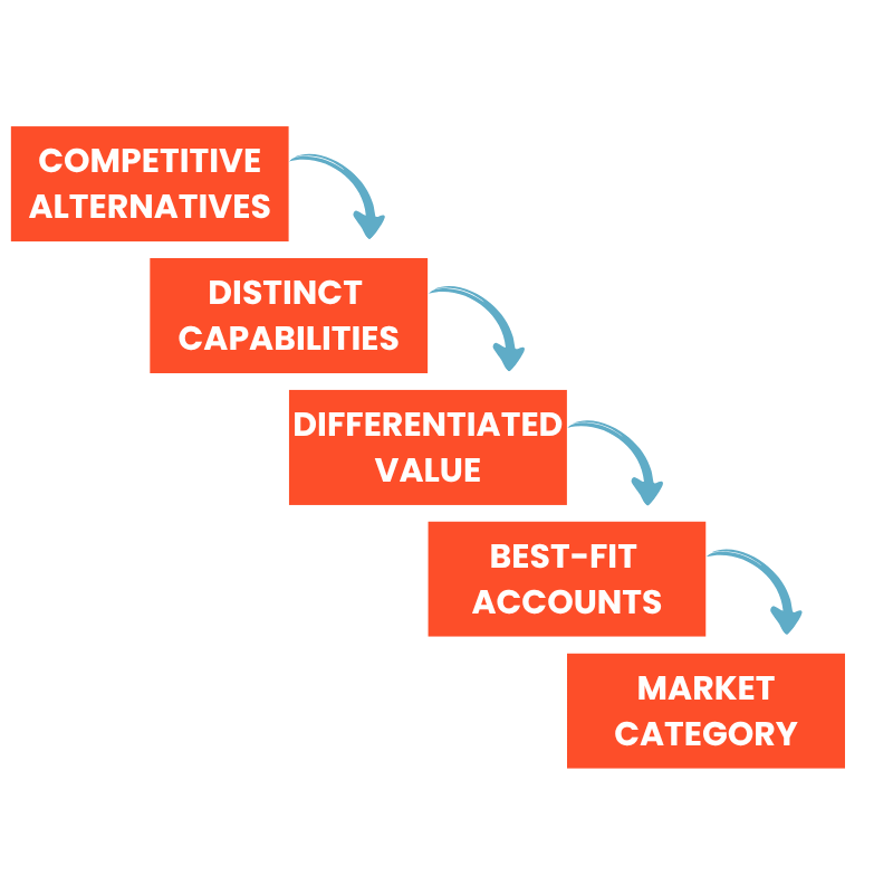
Step 1 - Competitive Alternatives - Does this change in capabilities mean your prospects would see you as an alternative to something different than the alternatives you previously based your positioning on? Have you seen proof of that in conversations you have had with prospects? List anything new and then move on to the next step.
Step 2 - Distinct Capabilities - Looking at the list of alternatives, has your list of distinct capabilities changed? Obviously, you have new capabilities, but maybe your competitors do too (since they are using the same models). List anything new and differentiated here.
Step 3 - Differentiated Value - Here is where we get to the important part. The competitors may or may not be new, the capabilities may or may not be new, the big question is this - does any of that shift our value themes? Frequently the answer is no. That’s because often the new capabilities strengthen a theme we are already positioning around. If that is the case, we can add the capabilities under an existing theme as part of the explanation of how we deliver that value. The positioning itself does not need to change. However, if we now have new value we can deliver to customers that we couldn’t before, we'll have to go back to the drawing board and redo the positioning.
Value themes often evolve more slowly than features (but be alert for changes)
Let’s take an example. Suppose you provide an application security solution. One of your value themes is limiting the damage of attacks by providing automated attack-response capabilities. Your competitors only provide attack detection. You are leveraging Anthropic to do that, and with their latest release, you can now provide more advanced responses (for example, an agent automatically blocks an attacker from gaining access to certain critical systems).
In this case, the competitors are the same, so there are no changes there. The capabilities have changed, but the change is strengthening a value theme you were already positioning around. In this case, the high-level positioning has not changed - you still expect buyers to choose you because you have better incident response. What changes is how you talk about the details of how you do that.
Now, suppose we had the same product but the changes that Anthropic made allowed us to add a new agent focused on automating a security compliance audit. In that case, there would be a new capability that provides entirely new value unrelated to incident response. Here we would probably want to go back to square one and rework the positioning.
Notice that this would be much harder if we weren’t following a process to do positioning. If we are simply vibing our way through it, we will always be trying to assess how big the change is, and your positioning is left flapping in the wind every time Anthropic drops something new.
The more you understand the value your product delivers (vs features), the easier it will be to determine when it needs to change
If your positioning is just a feature list (hint: it isn’t!), it will feel like you need to shift it every time your product changes in any way. The more you really understand the value you deliver for customers that no other solution can, the more obvious it will be when it changes.
What do you think? Is your company experiencing AI-induced positioning whiplash? Let me know in the comments.
I am coming back from a summer break in the woods, and it was full of kayaking and long runs on dirt roads, and one million good books. I hope your summer was as relaxing as mine! Kayak photo tax:

Conferences
I will be at TuringFest in Edinburgh Sept 22-23. I love this conference so much. This year’s edition is focused on founders and funders. Use the code APRD20 to get a sweet 20% discount. Tickets are here. See you there?
October 7th I will be at Mind the Product in Chicago. This is their first time in Chicago and I’m super stoked to be there! Get a whopping 50% off the ticket price with my discount code AprilVIP50. Get tickets here.
Podcasts
I’ve been on a LOT of podcasts over the summer. Here is a sampling:
The Decision Load podcast - I had fun with this one and tell a story about how I needed the CEO’s approval at a billion dollar company to order a box of brochures. Ah the good ol days.
The Data Faces podcast - if you know me, you know data is my jam, lol
The Rare Mind podcast - “Strategy” is a mis-used word imo.
As usual, I appreciate you, lovely subscribers. If you are new here - welcome! I only publish when I’ve got something on my mind so don’t expect to see this every week! All killer, no filler is the goal.
April
April, this is great. What I'm seeing is that founders are scared to make that founding bet (Head-to-Head, Niche Down, or Create A New Category). Obviously, when creating a new category, you need a wedge/front door to drive revenue, which is 99.9% of the time niching down. But founders are afraid to pick a direction and go. That's why I'm so bullish on category. If we know we want to build software for Real-Time Emergency Management, then even though the positioning of various products/features may change, the goal should still be to be the king of that category. Hope I'm making sense.
Looking forward to giving this a read!